Search

The Sunday Teacher

Lessons from The Great Book

Category

Uncategorized

Four Learners

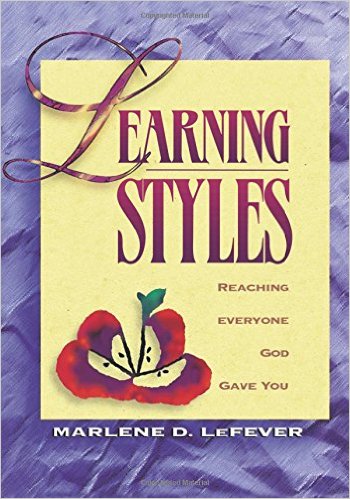
Not everyone learns in the same way. A good lesson plan incorporates sections that appeal to different kinds of learners. I use four ingredients in my plans based loosely on Marlene LeFever’s book, Learning Styles:

Facts – concrete, memorable facts about the passage or idea you are communicating. This kind of leaner may demand, “tell me what I need to know.” If you succeed they might reply, “got it!”

Ideas: historical context of the passage, statistics, character biography.

Stories – imaginative narrative that communicates the point you are making. You are responding to the question, “how should I think/feel about this and why should I know it?” If you succeed with this group they might say, “that makes sense.”

Ideas: Movie clips, personal testimony, illustrations, pictures.

Activities – The active learner learns by doing something. The question is, “What difference does this make?” If you succeed with this group they might say “I can do it.”

Ideas: Games, crafts, role play.

Dynamic – a dynamic learner doesn’t really get the point until they make it themselves. Having part of your class devoted to discussion allows this group to think out loud. Once they say it they learn it. They ask, “What can I contribute to this idea/point?” If you succeed with this group they might say “I own it.”

Ideas: Discussions, smaller groups or one-to-one, debate, dilemmas.
Finger Notes

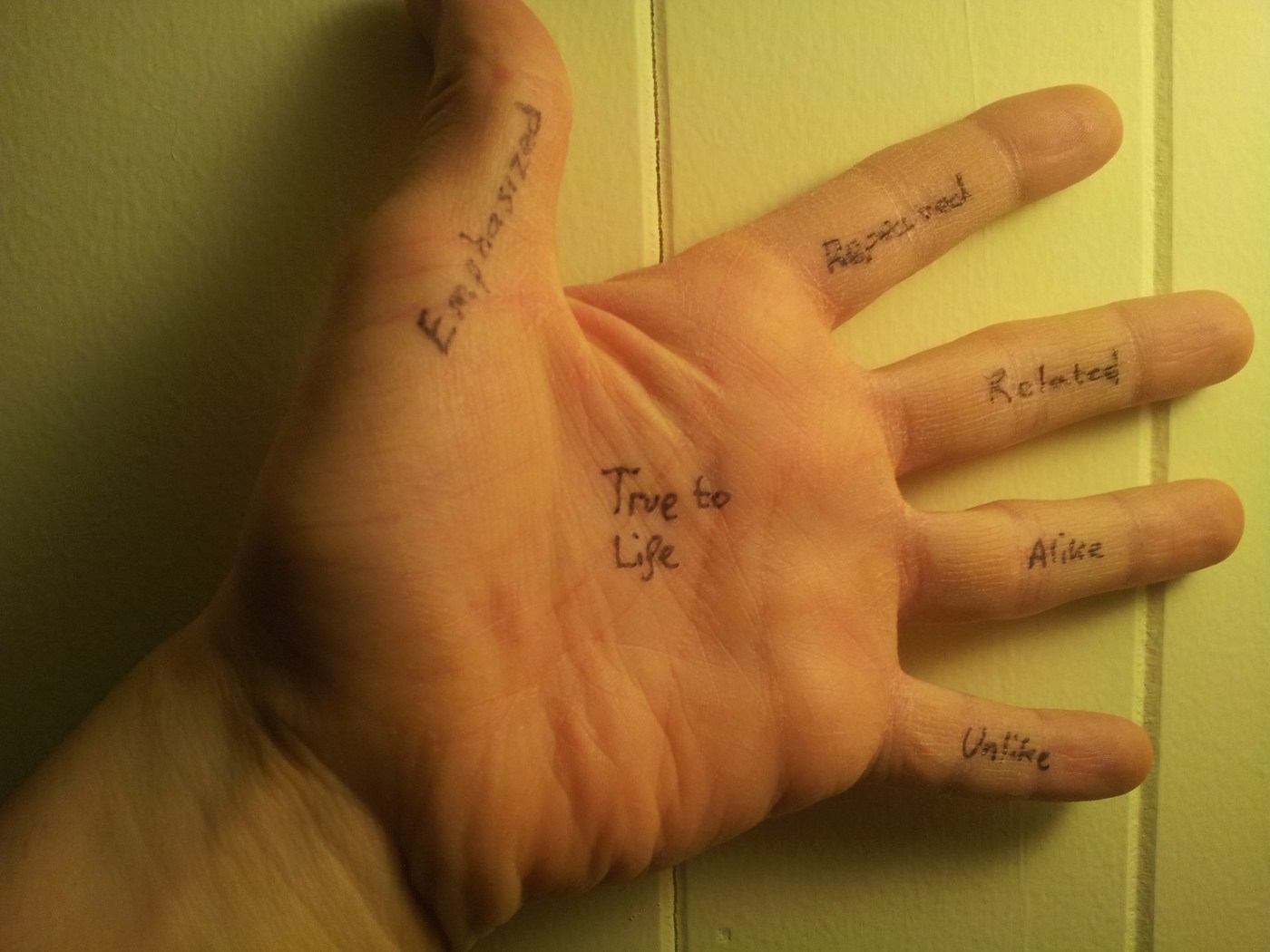
Most students don’t take notes in a Sunday class. And insisting that your students sit with a notebook can be a little too much like school (or an excuse for doodling). However, taking notes really helps students to memorize what you are teaching. So, try getting your students to write notes on their fingers.

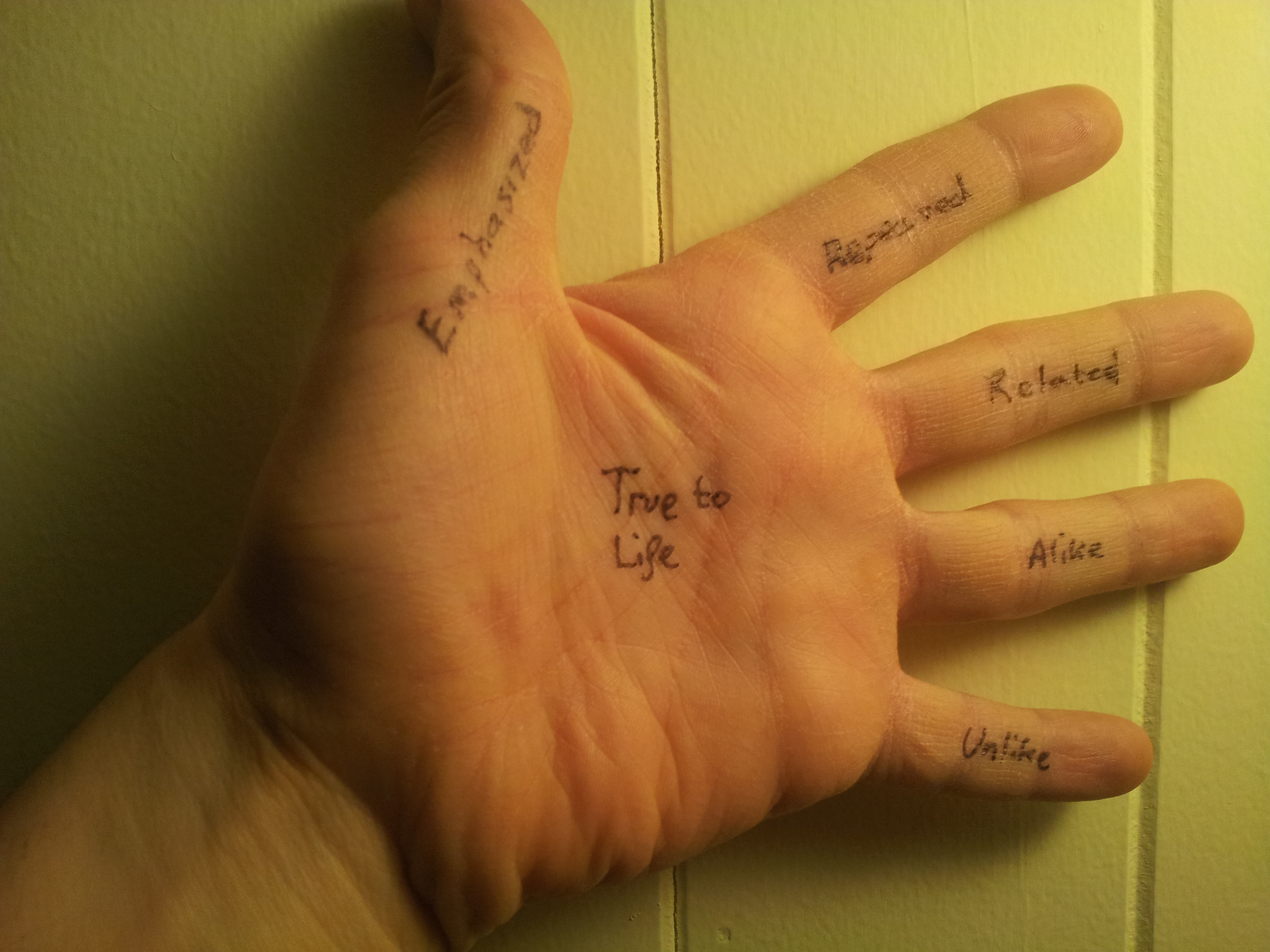
I got this idea from Living by the Book by Howard G. Hendricks and William D. Hendricks. The book is about inductive Bible study. The show you how to read the Bible and look out for important parts of the text. In order to help you remember, they use a finger per point. They suggest that when you read a text you should look for what is emphasized, repeated, related, alike, unlike and true to life. To remember this just write it on your hand like this…

20130105_073308

You could use this technique to remember a narrative–one of Paul’s missionary journeys, for example–or a series of points in an argument, a list of applications from a text or a list of characteristics of godly character.

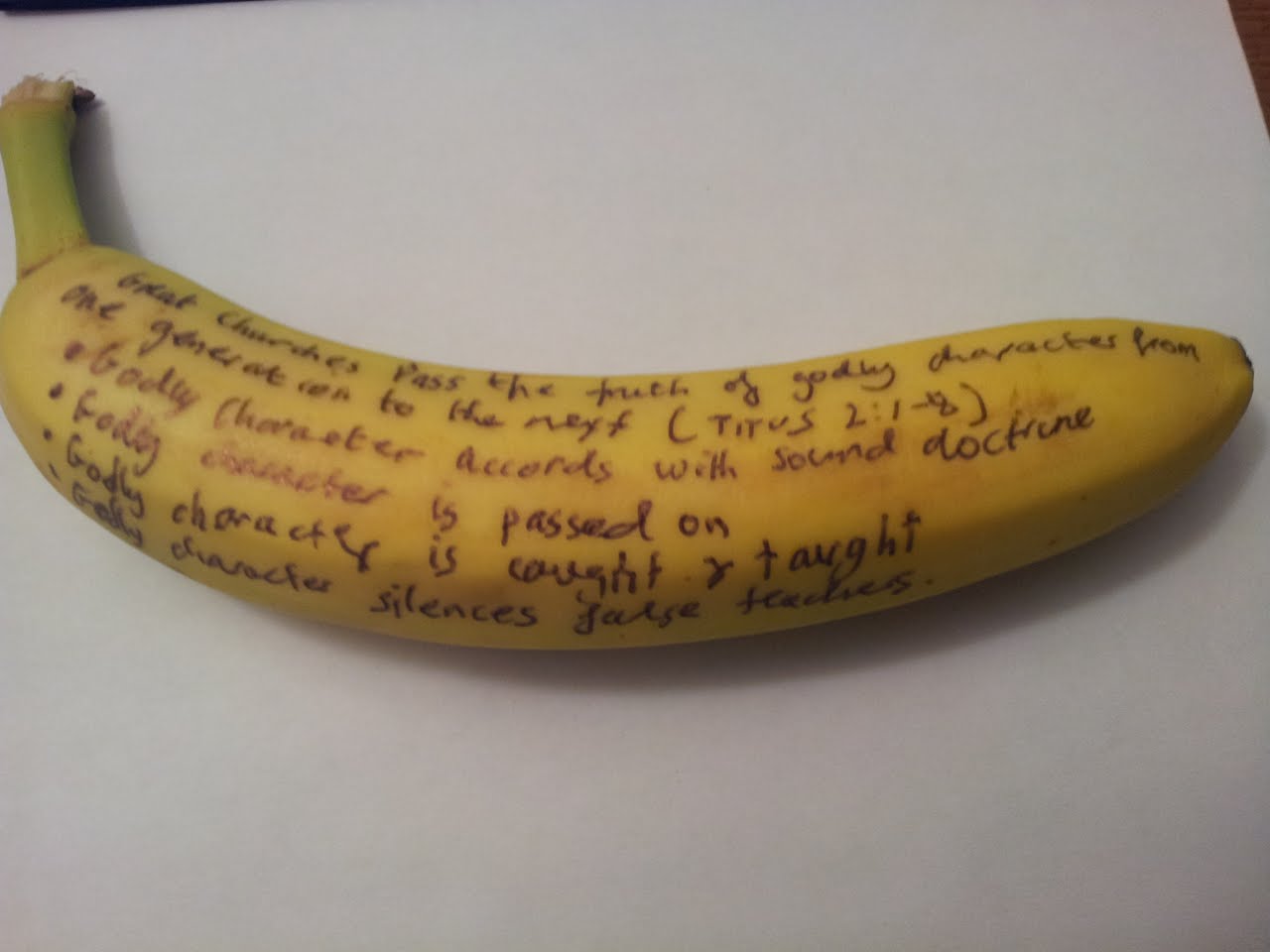
Alternatively, get them to take notes on a banana!! This sounds weird,  but a banana is perhaps the greatest writing surface for a ball point pen that has ever been discovered!

Notes on Titus 2:1-8:

bannana

Comic Book Bible

If you want a group of students to learn a book try making them play characters in a comic book version. Every lesson get students to create a still life scene of what you are studying and take a picture. Then collect the pictures, add captions and speech bubbles. Make copies for students (and parents) when you complete the study of the book.

Word Wall

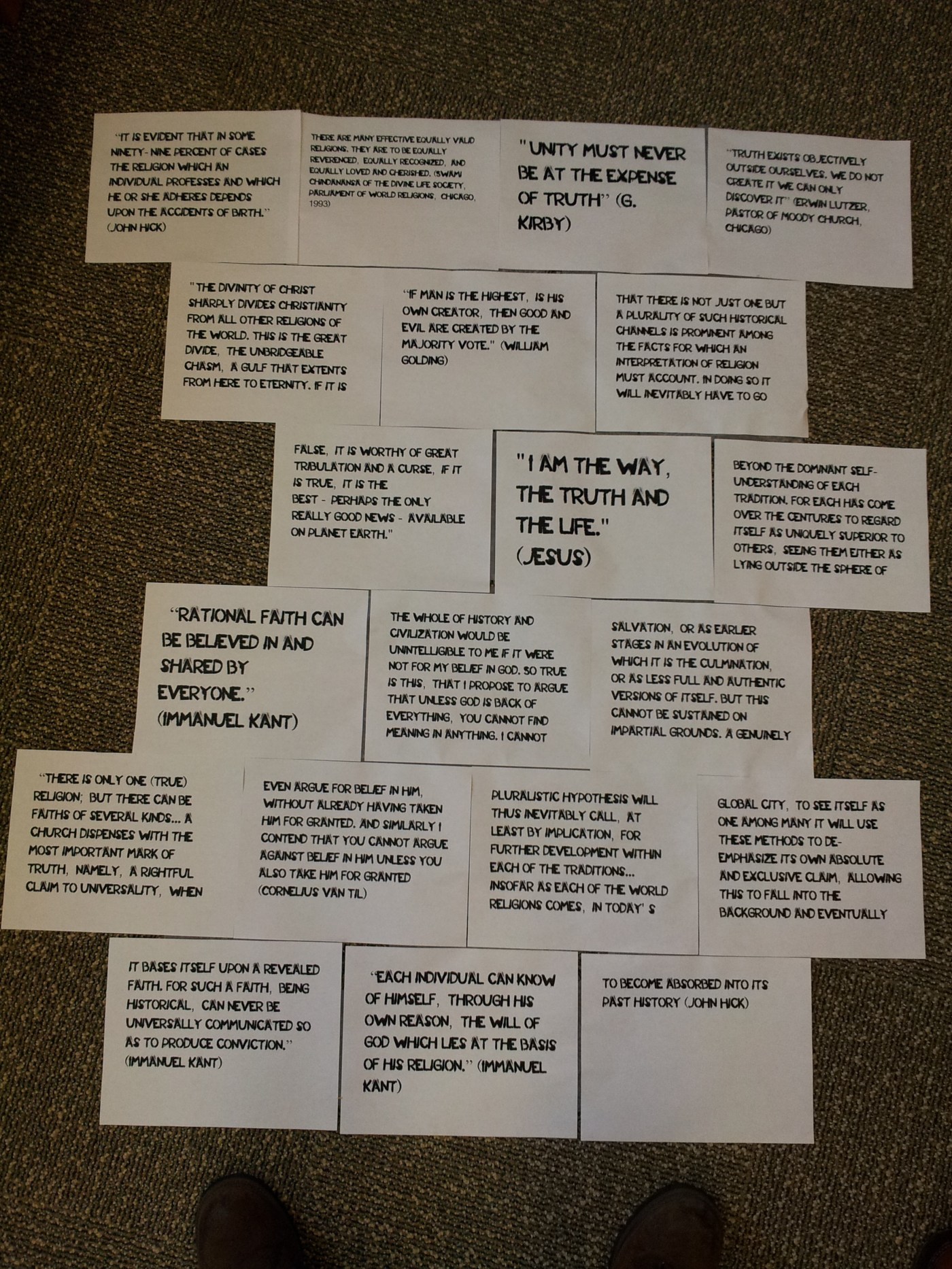
Sometimes you just want students to get their thinking caps on. You have a whole load of ideas, quotes, scripture, pictures, but don’t know what will work best. Try using them all! Just use extra large font and print on multiple sheets of paper. Tape the paper together to create a wall and hang it up. Students can read the wall and begin discussing some of the “bricks.”

Here is one I did for discussing religious pluralism in a college class:

20121214_105553

A Blog for the Teacher

Welcome to The Sunday Teacher, a blog designed to help inspire Sunday School teachers to teach the Bible creatively to young people. I will post teaching tricks, advice on theory and method, ideas and anything else that I think will help Sunday school teachers. Enjoy!

Create a free website or blog at WordPress.com.

Up ↑